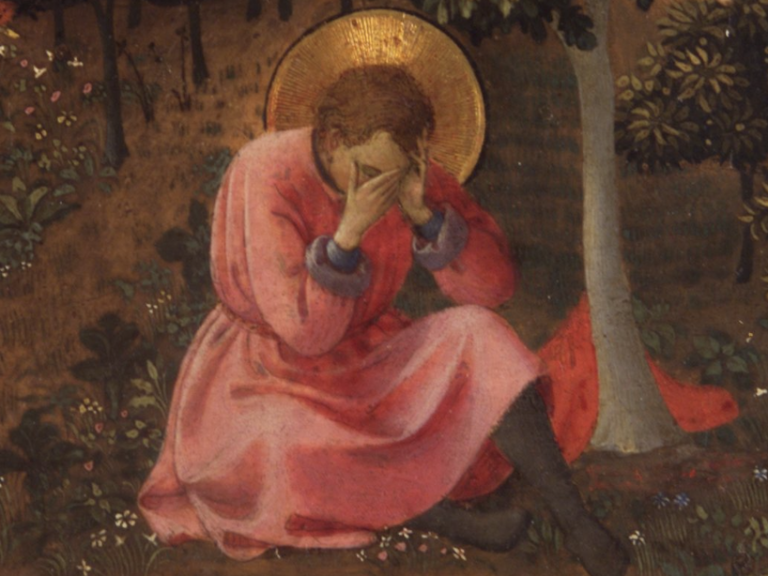
Fra Angelico, The Conversion of Saint Augustine (1430), detail
Augustine of Hippo: Confessiones
Augustine of Hippo (354–430) was born at Thagaste, a small inland town in Roman Numidia (today Souk Ahras in eastern Algeria) into a family of modest means. His father Patricius was a town councillor who leaned on a wealthy neighbour to keep his clever son in school, and a pagan until his deathbed. His mother Monica was a Christian of formidable determination, and she appears throughout her son’s writings as the person he could neither satisfy nor escape. He was educated at Thagaste, then at Madauros, then at Carthage, the second city of the Latin West. He became a teacher of rhetoric at Carthage, moved to Rome in 383, and from the autumn of 384 served at the imperial court at Milan as rhetorician, writing public speeches. For nine of those years, he was a Manichee. At Milan he heard Ambrose preach, read the Platonists, and in the summer of 386 underwent the conversion he describes in Book 8; he was baptised the following Easter, and Monica died at Ostia while they waited for a ship home. He never left Africa again. Ordained priest at Hippo Regius in 391, allegedly against his will, and made bishop there in 395, he spent the next thirty-five years preaching, arbitrating property disputes, answering letters and writing. He died on 28 August 430, in the third month of the Vandal siege of his city. Augustine began writing the Confessions around 397, and had it finished by about 401. It runs to thirteen books and addresses God as its primary reader and judge.
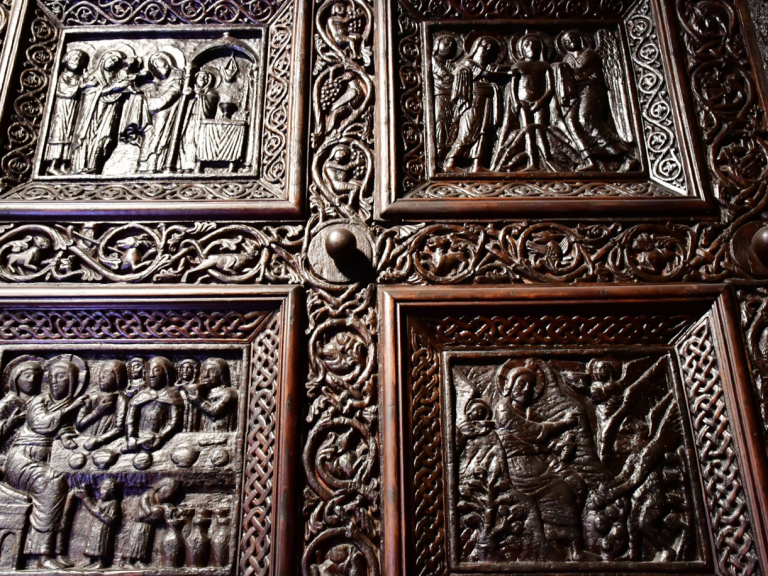
Doors of the cathedral of St Domnius in Split, Andrija Buvina (1214)
Thomas the Archdeacon: Historia Salonitana
Thomas of Split (c. 1200–1268), known to posterity as Thomas the Archdeacon, spent almost his whole life in a Dalmatian commune of a few thousand inhabitants. Around 1222, he was sent to Bologna to study law, rhetoric, grammar, and the notarial art. He then returned home to serve as notary, became archdeacon of the cathedral chapter in 1230, and held that office until his death. In 1243, the canons elected him archbishop, but his uncompromising views on the independence of the Church had made him enemies among the citizens, and he stood down without ever occupying the see. His one great work, known today as the Historia Salonitana – runs from the apostolic foundation of Salona down to the 1260s, but its heart is the thirteenth century Thomas lived through and helped to govern. It is a biased book. Thomas writes as a Latin patrician of an urban commune: suspicious of the Slav hinterland, contemptuous of factional bloodshed among his fellow citizens, and convinced that Split’s salvation lay in importing an Italian institution, the podestà. Thomas believed that he should be a salaried foreigner with some training in law, appointed for a short, fixed term precisely because he had no local kin, no local friendships and therefore no local scores to settle. In 1239, Thomas helped to secure the election of Split’s first podestà, Gargano de Arscindis of Ancona, who governed the city for three years.
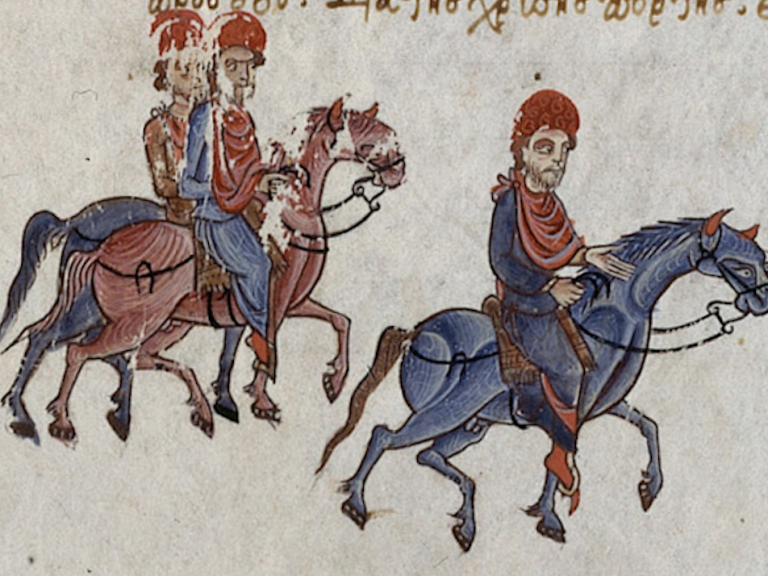
Nicephorus enters Constantinople (963), from the Madrid Skylitzes (12th c.)
Liutprand of Cremona: Relatio de legatione Constantinopolitana
Liutprand of Cremona (c. 920–972) was a Lombard bishop, diplomat, and historian whose works rank among the most vivid – and most polemical – writing to survive from the tenth century. Born into an aristocratic family in Pavia, he grew up at the court of Hugh of Provence, King of Italy, and later became chancellor and then ambassador for Berengar II, who sent him on his first diplomatic mission to Constantinople in 949. There Liutprand had the opportunity to learn Greek and observe Byzantine court culture at close quarters. After a quarrel with Berengar he defected to the court of the Saxon king Otto I – later Holy Roman Emperor Otto I the Great – in whose service he spent the remainder of his career. Otto rewarded him with the bishopric of Cremona around 961 and employed him in a series of delicate missions, including the famous one to Constantinople in 968 to negotiate a marriage alliance between Otto's son (later Otto II) and a Byzantine princess. The mission failed miserably as Emperor Nicephorus refused to recognize Otto as a legitimate emperor and subjected Liutprand to s series of deliberate humiliations.
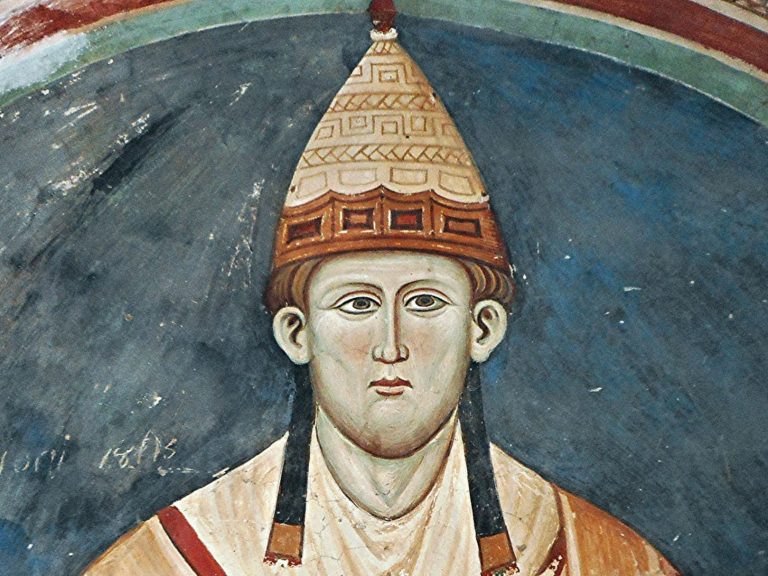
Pope Innocent III, ca. 1219, Sacro Speco cloister
Pope Innocent III: Epistula ad crucesignatos
Innocent III (Lotario dei Conti di Segni, c. 1160-1216) was one of the most influential and politically powerful popes of the Middle Ages. He became pope in 1198, at a time when the papacy reached the height of its political and legal authority. Educated in Paris and Bologna, Innocent was an exceptionally learned theologian and canon lawyer, but also a highly capable statesman who viewed the papal office as the supreme authority over the entire Christian world. During his pontificate, the Fourth Crusade was launched with the original aim of liberating the Holy Land from Muslim rule. Instead, it became one of the greatest scandals in the history of the crusading movement.
This letter to the crusaders sent in February 1203 from the Lateran, the papal residence in Rome. Innocent orders the crusaders to return the stolen goods to the inhabitants of Zadar, to repent sincerely for their actions, and to seek forgiveness from Emeric of Hungary, under whose protection the city stood at the time. He also insists that they must never again attack Christian lands and cities.
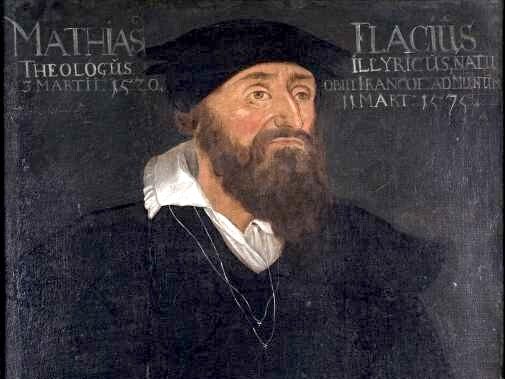
Matthias Flacius Illyricus, 16th c. Friedrich Schiller University of Jena, Portrait Collection.
Matthias Flacius Illyricus: Scheda
Matthias Flacius Illyricus (1520-1575) was a Lutheran theologian, historian, and polemicist born in Labin (Albona) in Istria. Educated in the humanist and reforming environments of University of Wittenberg, he became one of the most uncompromising figures of the Protestant Reformation. A close associate of Martin Luther and later a leading voice among the so-called Gnesio-Lutherans, Flacius devoted much of his career to defending what he saw as the doctrinal purity of early Christianity against both Catholic and moderate Protestant positions.
One of his seminal contributions lies in the field of Church history, as he was a driving force behind the monumental Magdeburg Centuries, a multi-volume work that systematically presented Church history century by century.
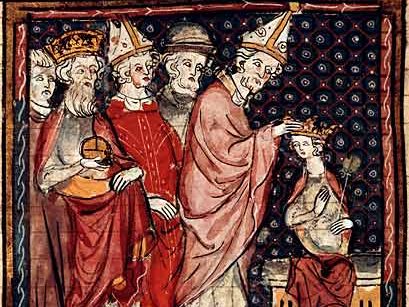
Coronation of Louis the Pious. Grandes Chroniques de France, 14th c. Musée Goya, Castres.
Eginhardus: Vita Caroli Magni
Einhard (c. 775-840) was a Frankish scholar and courtier who served Charlemagne and his son Louis the Pious. Born into a family of landowners, he was educated at the monastery of Fulda, one of the most important centres of learning in the Frankish kingdom. Around 791, he joined Charlemagne’s court, where the emperor had gathered leading scholars under the direction of Alcuin of York. After Charlemagne’s death in 814, Louis the Pious appointed him as private secretary, a position he held until retiring from court in 830.
Einhard’s most famous work is his biography of Charlemagne, the Vita Caroli Magni (c. 817-836), modelled on Suetonius’s Lives of the Caesars and providing valuable information about Charlemagne’s life and character.
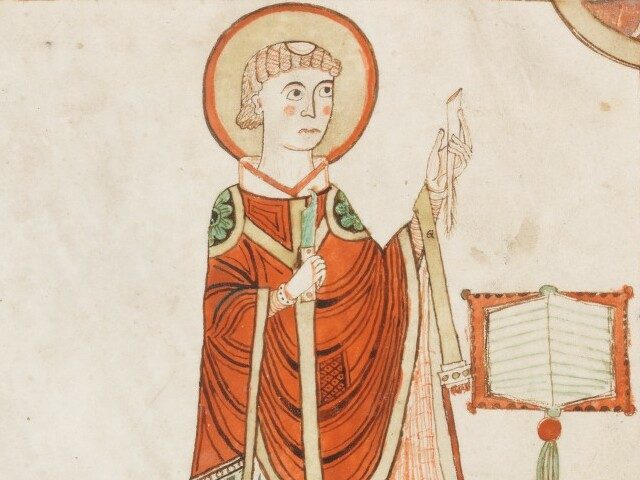
Bede in a 12th-century codex from the Swiss monastery of Engelberg
Beda Venerabilis: Historia ecclesiastica gentis Anglorum
The Venerable Bede (ca. 672/673-735) was an Anglo-Saxon Benedictine monk, theologian, and historian born in Northumbria. Educated from an early age in the twin monasteries of Wearmouth and Jarrow, he spent his entire life there as a scholar and teacher. Bede’s scholarly work covered nearly every field of early medieval knowledge – grammar, rhetoric, natural science, chronology, and above all, theology.
Bede’s most famous work is the Historia ecclesiastica gentis Anglorum (The Ecclesiastical History of the English People, 731), a cornerstone of medieval historiography, praised for its careful use of sources and clear chronological structure.
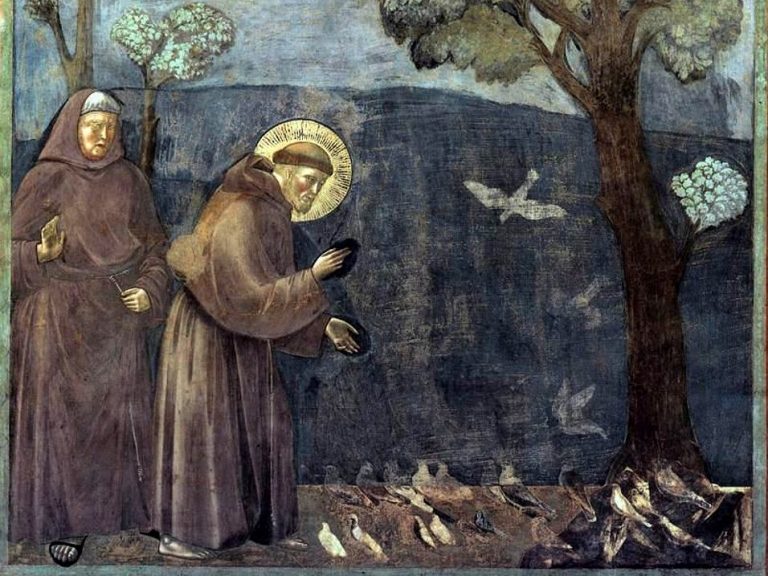
Saint Francis Preaching to the Birds by Giotto di Bondone (d. 1337)
Bonaventura de Balneoregio: Legenda Maior sancti Francisci
Bonaventure of Bagnoregio (Giovanni Fidanza, 1221-1274) was one of the most important theologians and philosophers of Scholasticism, as well as the long-serving Minister General of the Franciscan Order, credited with strengthening its internal structure. In the dispute over the vow of poverty, he acted as a mediator between the moderate and radical Franciscans. In 1263, he wrote a biography of St Francis of Assisi, and his mystical works, such as Journey of the Soul into God (Itinerarium mentis in Deum), are considered masterpieces of medieval devotional literature.
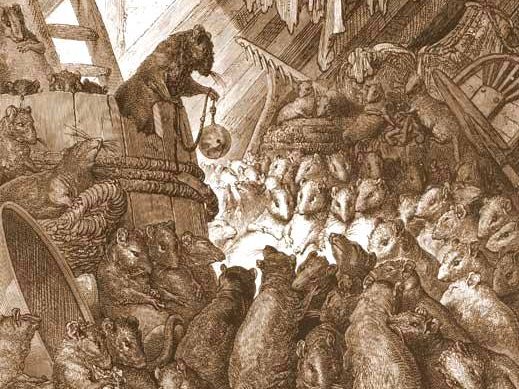
Gustave Doré, Conseil tenu par les Rats, ca. 1868
Odo de Ceritona: Fabulae
Odo of Cheriton (c. 1180/90–1246/47) was an English preacher and fabulist. Trained in Paris (Master by 1211), he later taught in southern France and in Spain (Palencia, then Salamanca), before returning to England in 1233 to manage family estates. Though he wrote popular sermon collections and pastoral handbooks, his lasting fame rests on a compact, punchy book of moralized tales for preachers: the Parabolae (“I will open my mouth in parables”) or Fabulae.
For readers today, Odo is brisk, memorable, and morally pointed. His animals speak plainly, his morals land quickly, and the preacher’s aim – to move hearers from story to practice – still works on the page. Perfect material for short Latin readings with a lively discussion to follow.
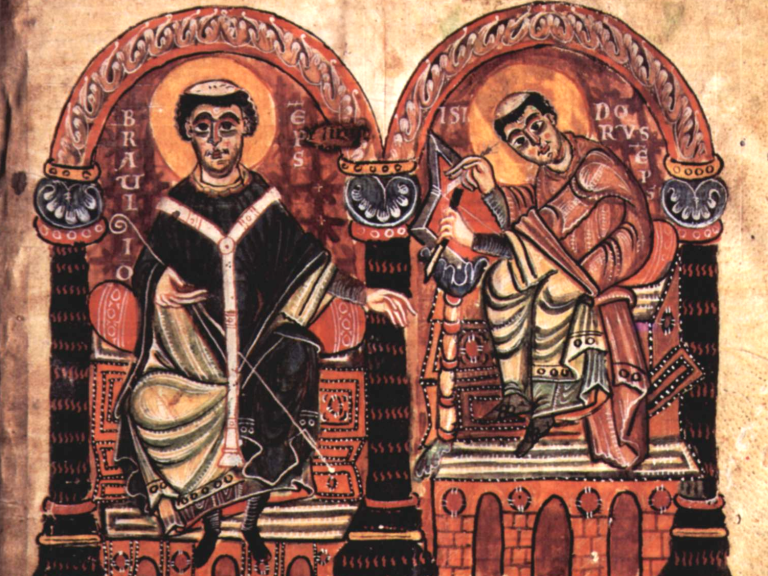
Isidore of Seville (right), Etymologiae, 10th c., Einsiedeln Abbey
Isidorus Hispalensis: Etymologiae
Isidore of Seville (c. 560-636) was the most influential Latin scholar of the early medieval West. Contemporaries admired both his eloquence and his ability to speak to learned and unlearned alike; later writers remembered him as a doctor of the Church whose authority ranged from biblical exegesis to natural philosophy.
Isidore’s many works – served specific needs such as teaching, preaching, adjudicating, and preserving. But above all stands a single, vast book that attempted to gather the knowledge of the world: the Etymologies (Etymologiarum sive Originum libri XX), a twenty-book encyclopaedia that became the portable library of Latin Christendom.