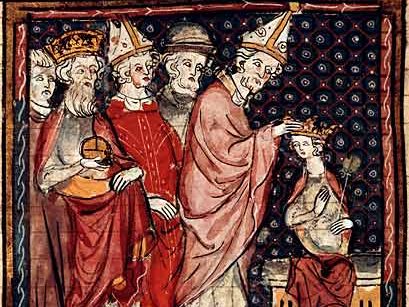
Coronation of Louis the Pious. Grandes Chroniques de France, 14th c. Musée Goya, Castres.
Eginhardus: Vita Caroli Magni
Einhard (c. 775-840) was a Frankish scholar and courtier who served Charlemagne and his son Louis the Pious. Born into a family of landowners, he was educated at the monastery of Fulda, one of the most important centres of learning in the Frankish kingdom. Around 791, he joined Charlemagne’s court, where the emperor had gathered leading scholars under the direction of Alcuin of York. After Charlemagne’s death in 814, Louis the Pious appointed him as private secretary, a position he held until retiring from court in 830.
Einhard’s most famous work is his biography of Charlemagne, the Vita Caroli Magni (c. 817-836), modelled on Suetonius’s Lives of the Caesars and providing valuable information about Charlemagne’s life and character.
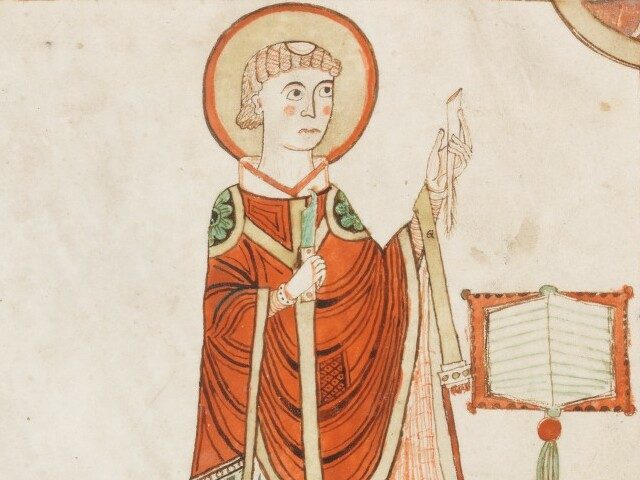
Bede in a 12th-century codex from the Swiss monastery of Engelberg
Beda Venerabilis: Historia ecclesiastica gentis Anglorum
The Venerable Bede (ca. 672/673-735) was an Anglo-Saxon Benedictine monk, theologian, and historian born in Northumbria. Educated from an early age in the twin monasteries of Wearmouth and Jarrow, he spent his entire life there as a scholar and teacher. Bede’s scholarly work covered nearly every field of early medieval knowledge – grammar, rhetoric, natural science, chronology, and above all, theology.
Bede’s most famous work is the Historia ecclesiastica gentis Anglorum (The Ecclesiastical History of the English People, 731), a cornerstone of medieval historiography, praised for its careful use of sources and clear chronological structure.
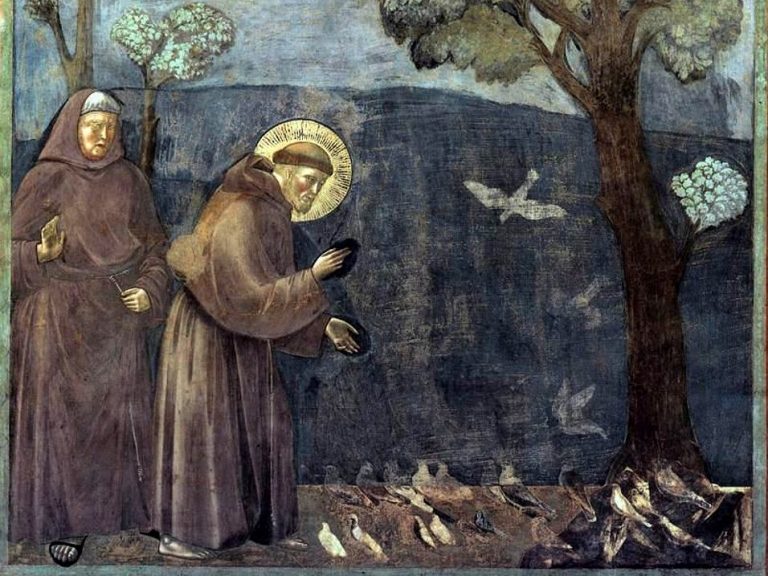
Saint Francis Preaching to the Birds by Giotto di Bondone (d. 1337)
Bonaventura de Balneoregio: Legenda Maior sancti Francisci
Bonaventure of Bagnoregio (Giovanni Fidanza, 1221-1274) was one of the most important theologians and philosophers of Scholasticism, as well as the long-serving Minister General of the Franciscan Order, credited with strengthening its internal structure. In the dispute over the vow of poverty, he acted as a mediator between the moderate and radical Franciscans. In 1263, he wrote a biography of St Francis of Assisi, and his mystical works, such as Journey of the Soul into God (Itinerarium mentis in Deum), are considered masterpieces of medieval devotional literature.
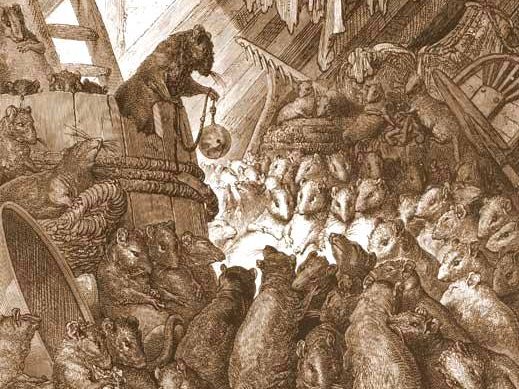
Gustave Doré, Conseil tenu par les Rats, ca. 1868
Odo de Ceritona: Fabulae
Odo of Cheriton (c. 1180/90–1246/47) was an English preacher and fabulist. Trained in Paris (Master by 1211), he later taught in southern France and in Spain (Palencia, then Salamanca), before returning to England in 1233 to manage family estates. Though he wrote popular sermon collections and pastoral handbooks, his lasting fame rests on a compact, punchy book of moralized tales for preachers: the Parabolae (“I will open my mouth in parables”) or Fabulae.
For readers today, Odo is brisk, memorable, and morally pointed. His animals speak plainly, his morals land quickly, and the preacher’s aim – to move hearers from story to practice – still works on the page. Perfect material for short Latin readings with a lively discussion to follow.
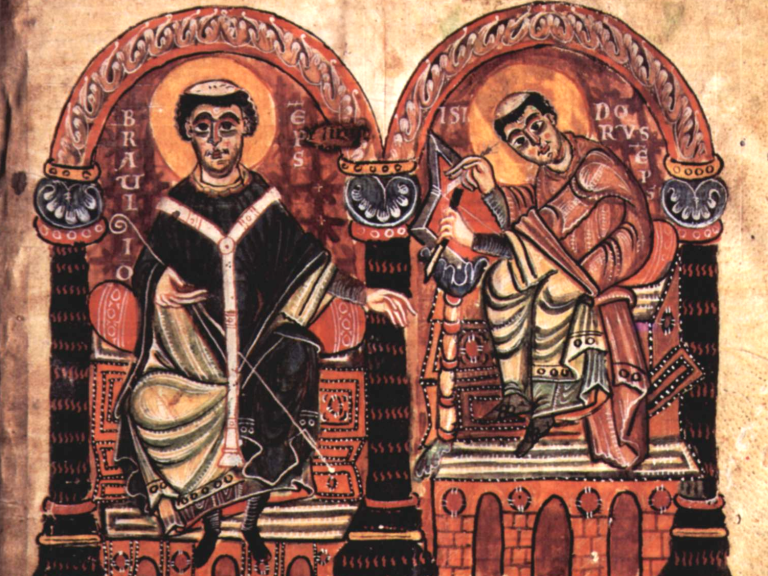
Isidore of Seville (right), Etymologiae, 10th c., Einsiedeln Abbey
Isidorus Hispalensis: Etymologiae
Isidore of Seville (c. 560-636) was the most influential Latin scholar of the early medieval West. Contemporaries admired both his eloquence and his ability to speak to learned and unlearned alike; later writers remembered him as a doctor of the Church whose authority ranged from biblical exegesis to natural philosophy.
Isidore’s many works – served specific needs such as teaching, preaching, adjudicating, and preserving. But above all stands a single, vast book that attempted to gather the knowledge of the world: the Etymologies (Etymologiarum sive Originum libri XX), a twenty-book encyclopaedia that became the portable library of Latin Christendom.